Rome, Florence and Venice in 10 Nights Without Daily Hotel Changes
Three Italian cities in ten nights can work when the route is treated as a sequence of bases rather than a race through landmarks. This example allocates four nights to Rome, three to Florence and three to Venice. It deliberately limits hotel changes to two. It is an original route framework: transport, museum capacity, local rules and hotel arrangements must be verified for your own dates before you commit.
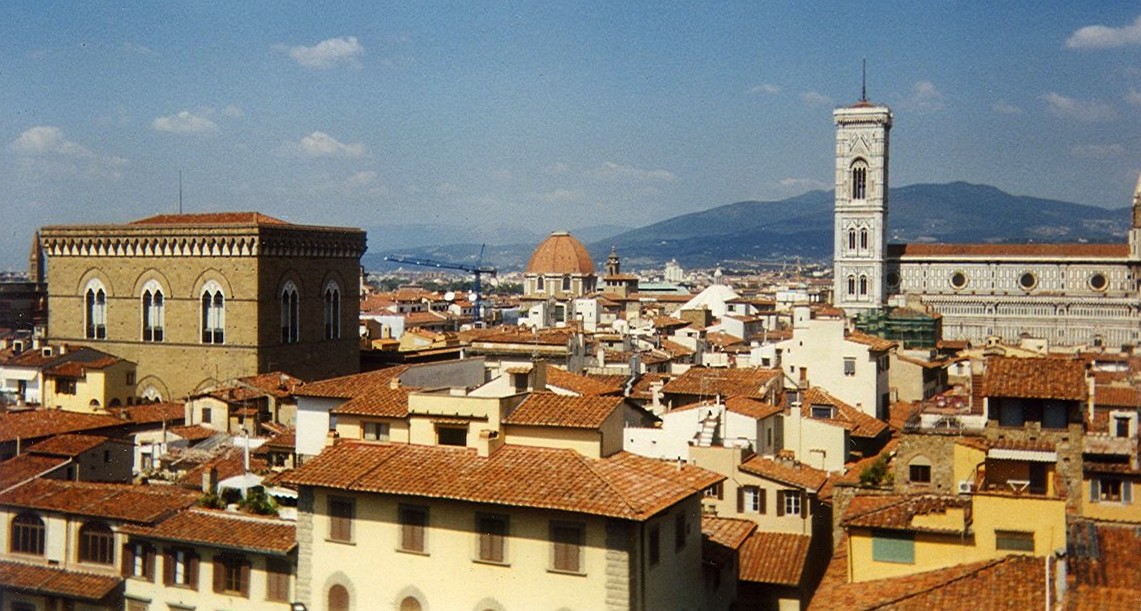
Photo: Infrogmation · CC BY-SA 4.0. Reference photograph: FlorenceSkyline.jpg. It does not establish current access, weather, operations or a future event. Display may crop the original.

Start with the direction and the flights
Compare flying into Rome and out of the Venice area with a return fare that requires retracing the route. Include the actual departure airport, transfer and any final hotel night. A cheaper flight can be poor value if it creates a long backtrack. Reverse the route if the offers and priorities favor it, but preserve the same principle: travel in one direction and avoid making the international departure depend on a distant same-day rail connection.
Give Rome the longest settling period
After arrival, choose a short neighborhood loop and an easy meal. Use the three full days for separate geographic clusters rather than combining every major site on one date. If a particular archaeological site or museum matters most, check its own ticket calendar and entry instructions. A visit with security, queues and a long interior route should be the anchor of the day. Leave lunch and a recovery period before another commitment.
Choose Italian rail products deliberately
Compare the actual operators serving your intended city pairs, their exact stations, fare conditions and baggage arrangements. Rome and Florence have multiple stations; a city-name result is not enough. Reserved high-speed services and regional trains can have different ticket-use rules. Read the instructions on the purchased product, including any validation requirement. Do not apply a rule from a different train type or assume that holding a pass replaces a mandatory reservation.
Make Florence a compact middle base
A three-night stay offers two full days, so choose the major art or architecture visits that matter most before adding excursions. One intensive museum day and one lighter city day may be more satisfying than two consecutive queue-heavy days. The official Florence visitor portal is a useful starting point for current practical information. If considering a half-day outside the city, calculate the complete return journey and identify which Florence activity it displaces.
Plan Venice around the last mile
The rail arrival is only part of reaching the room. Check the route from the booked station to the lodging, including walking surfaces, bridges, boat stops and luggage handling. Ask the hotel for its recommended arrival instructions and any relevant local visitor requirements. Do not describe every waterside property as convenient: a beautiful map position can still involve several steps and a complicated transfer. Carry only the luggage the group can manage independently.
Give each city a different rhythm
Rome can carry the longest historical visits, Florence the most concentrated art planning, and Venice more time for neighborhood wandering. This is a way to balance the trip, not a rule about what each city contains. Keep a morning or afternoon in Venice free from timed tickets. A route made entirely of major attractions leaves little space for the ordinary streets and meals that distinguish one city from another.
Book accommodations as a connected chain
Check arrival hours, bag storage, room configuration and cancellation dates at all three properties before paying for restricted trains. A Florence check-in that ends early can conflict with a leisurely transfer from Rome. A Venice room accessed by stairs may not fit a traveler who managed the earlier hotels well. Record the relevant contact and written confirmation beside each stay. The chain is only as comfortable as its least workable arrival.
Do a final capacity audit
Count the full days again after inserting transfer times and airport travel. Remove an excursion if it makes a city feel like a single crowded afternoon. Keep a list of optional places rather than purchasing every entry at once. Recheck official local notices and attraction rules shortly before departure; this article does not freeze future access or admission policies. The successful version is the one that still works when lunch takes longer or a traveler needs an easier morning.
Your working checklist
Checkmarks stay in this browser when storage is available. They do not submit information or complete a purchase.
Put it into practice
- Compare one-direction flights with any backtracking costs.
- Allocate four Rome nights, three Florence nights and three Venice nights as a starting example.
- Place major timed visits on full days, away from transfers.
- Verify the precise train product and its ticket-use instructions.
- Ask each hotel about arrival, luggage storage and essential access needs.
- Trace the Venice station-to-room journey in detail.
- Remove optional excursions until the route has genuine breathing space.
Before you finish
- Two hotel moves are the only essential intercity transfers.
- Rail rules come from the booked operator and product.
- Venice access has been checked beyond the map pin.
- The final flight is protected from a distant same-day connection.
Common questions
Can I add Pisa or Tuscany?
It is possible only by using time currently assigned to Florence or by extending the trip. Calculate the complete excursion, including local transport and meals. Avoid treating a different region as a quick extra with no effect on the main itinerary.
Which city should get an extra night?
Give it to the city containing your strongest interests or the most demanding access arrangements. An extra settling night can be particularly useful after a long international flight. There is no universal best split.
Should I reserve every high-speed train now?
Reserve important fixed journeys once the hotels and dates are stable, after reading the change conditions. If a journey follows a separate flight, consider flexibility and a larger buffer. A low fare can be poor protection against a missed connection.
Does a centrally located Venice hotel avoid bridges?
Not necessarily. Ask for a step-by-step arrival route and verify it against your luggage and mobility needs. A property can be central while still requiring several bridges or an inconvenient boat connection.