Vienna, Prague and Budapest: Plan a Three-City Rail Trip
Vienna, Prague and Budapest are often grouped into one holiday, but the order and number of nights deserve more thought than a list of capitals. For an illustrative eleven-night trip, allow four nights in Vienna, four in Prague and three in Budapest, or change the order to fit flights and current trains. This is a planning exercise rather than a timetable. Geography, station transfers and the group's interests determine whether all three belong in your route.
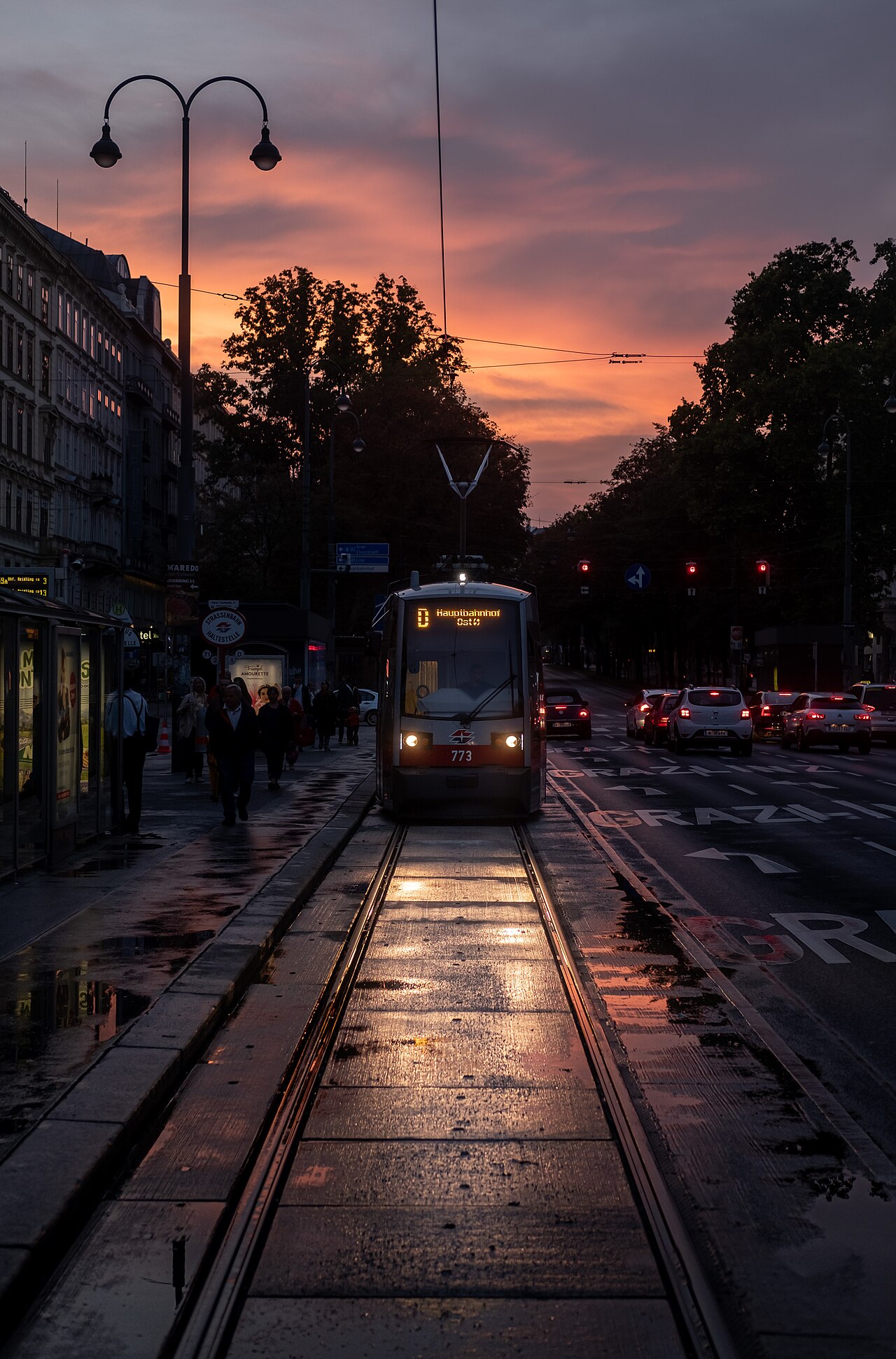
Photo: Jules Verne Times Two · CC BY-SA 4.0. Reference photograph: Tram in Kärntner Ring, at twilight (Vienna, Austria).jpg. It does not establish current access, weather, operations or a future event. Display may crop the original.
.jpg)
Test two routes before choosing
Price at least two flight-and-rail combinations, including a route that visits only two cities. Vienna sits differently in the rail network from a straight line drawn through three map pins; do not assume the order used in a travel article is efficient on your dates. Compare exact connections on the relevant operators. Include local trips between the hotel and station, not just the intercity duration. The simpler two-city alternative is a useful benchmark for what the third city costs in time.
Give each city a clear purpose
Write a short reason for visiting each capital. Vienna might be centered on art and music, Prague on architecture and neighborhoods, and Budapest on a particular cultural interest. These are examples, not exclusive identities. If the same vague description appears for every city, research more before booking. A defined purpose helps decide which deserves an extra night and prevents the itinerary becoming three nearly identical days of rushed monument photography.
Inspect stations and ticket products
Search with the full departure and arrival station names. Cross-check the ticket with the operating railway rather than assuming a pass or third-party summary supplies all requirements. Read seat reservation, refund and luggage terms. Keep overnight trains out of the plan unless you actively want that experience and understand the accommodation product. Sleeping poorly in transit does not necessarily create a usable sightseeing day, especially for travelers who need reliable rest.
Organize Vienna by neighborhoods
Choose one major museum or palace visit as a day anchor and pair it with a nearby walk or meal. Check performance dates and ticket conditions through the actual venue if music is a priority. Avoid buying several evening events before understanding how the daytime visits feel. The official Vienna visitor guide is a useful source of current listings, but a listed event is not a promise of available tickets. Leave space to enjoy an ordinary café or park without watching a countdown.
Make Prague days geographically coherent
Divide historic-center interests from activities farther away so you are not repeatedly crossing the city. Check walking surfaces and hills against the group's comfort, and trace the route to the actual attraction entrance. A picturesque lane can be crowded or uneven at busy times. Use a morning anchor, a meal break and one optional afternoon rather than a chain of mandatory stops. Keep a weather alternative near the same transport line where possible.
Give Budapest its own research
Do not infer local transit fares, currency or attraction rules from the previous capitals. Choose the specific venues you want and check their current official conditions. If a bath, performance or guided visit matters, research that operator's eligibility and booking instructions directly. Avoid describing a general city experience as a medical or therapeutic benefit. Separate the transport plan for the two sides of the river, especially if walking distance or steps are important.
Track several currencies cleanly
Record each quotation in its original currency and add a comparison column using a dated conversion assumption. Do not mix room prices in euros with meals in koruna or forint without labeling them. Your card provider's settlement rate and fees can differ from the illustrative conversion. Keep cash decisions modest and practical, based on current merchant and bank information. A spreadsheet is most useful when the group can see which totals are estimates and which have been paid.
Check whether the third move earns its place
After placing airport travel, two intercity transfers and hotel checkout periods, count the full days remaining. If a city has only a rushed afternoon, shorten the list or extend the trip. Preserve arrival evenings for settling rather than treating them as guaranteed performance nights. Share one dated plan with station names, booking references and hotel contacts. A well-connected route still needs recovery time and a realistic response to delay.
Your working checklist
Checkmarks stay in this browser when storage is available. They do not submit information or complete a purchase.
Put it into practice
- Write one concrete purpose for each city.
- Compare two route orders with actual travel dates.
- Price a simpler two-city alternative as a benchmark.
- Verify station names and ticket conditions with the operator.
- Place one main activity per full day and cluster nearby options.
- Label all currency assumptions and confirmed payments.
- Cut the third city if the transfer cost overwhelms useful time.
Before you finish
- Every city has more than a fragment of sightseeing time.
- Currency amounts retain their original labels.
- Station names are verified rather than guessed.
- Evening events do not depend on a flawless transfer.
Common questions
Is one week enough for all three?
It is possible to move between them, but that is different from having time to explore. With only a week, two bases may provide a better holiday. Count usable full days after all transfers before deciding.
Can I use one rail pass throughout?
Check current pass coverage and each selected train's reservation requirements. Then compare the total with separate tickets. Pass flexibility is valuable only where the intended services actually support that flexibility.
Should I exchange money for every country in advance?
That depends on your bank, accommodation and intended purchases. Compare official bank terms and carry a practical backup payment method. Avoid exchanging a large amount simply because a country uses a different currency.
Which capital deserves the most nights?
The one containing your strongest interests or the most complex arrival. Use the actual attraction list and pace needs. A generic ranking cannot choose the right allocation for every traveler.